Borka
Ronja, the Robber's DaughterBorka is a robber chief whose life is shaped by two overlapping inheritances: the old clan feud with Matt and his own responsibility to his wife, Undis, their son Birk, and his band. His move into the north side of Matt’s Fort brings that rivalry into the same fortress, but the story ultimately turns their contest into an alliance. After a wild-beasts’ match makes Matt the stronger chief, Borka keeps his name and authority over his own men; at the feast that follows, the two former enemies remember their shared childhood and begin to act like brothers.
Identity and Background
Borka is introduced through the legacy of the feud. Matt imagines that the birth of his daughter will torment Borka because Matt’s family line will continue while Borka, he assumes, has no child. Noddle-Pete agrees with the prediction that Borka’s line will end, but the assumption is already out of date: Borka has a son, Birk. The contrast establishes how rivalry distorts what the chiefs know about each other, and how the children will unsettle the feud’s claims about inheritance.
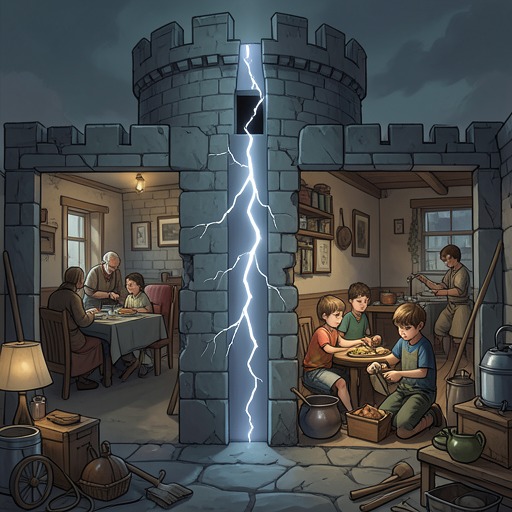
Birk identifies his family to Ronia as Borka, Undis, himself, and their twelve robbers, who have moved into the north fort. The settlement makes Borka not merely Matt’s distant opponent but the head of a household and a band living inside the divided fortress. The dispute is therefore at once territorial and familial: Borka has brought his wife, child, and followers somewhere he believes they can survive, while Matt regards the occupied keep as his own inherited domain.
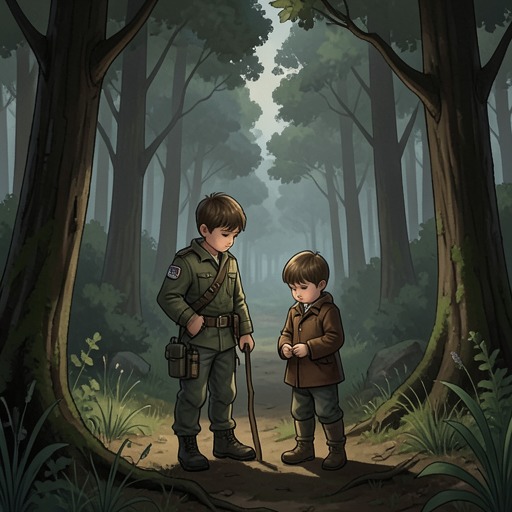
The two chiefs’ hostility has roots older than the present occupation. Borka recalls that he and Matt had once been boys together, catching rats near the old pigsty, before Matt’s father treated him as an enemy and taught Matt to regard every member of Borka’s clan as hostile. Borka says that before this lesson he had scarcely realized that the boys belonged to different clans. His account makes the feud something learned rather than inevitable: a childhood friendship was reorganized into inherited antagonism by an older generation.
Displacement and the North Fort
Borka explains that he could no longer remain in Borka’s Wood because the sheriff’s men were swarming there. He says he had to take his wife, child, and robbers somewhere else. Matt objects that Borka has taken a place without asking, but Borka answers by pointing out the contradiction in a robber condemning someone else for taking what he wants. Their argument exposes the unstable moral language of the chiefs: each claims grounds for his own actions while condemning the other’s.
Borka’s band had entered the northern keep by using an old route connected with the fortress’s former domestic life. He recounts that a boy tied a rope in place so the others could climb up, after which they could enter and establish a robbers’ den. When Matt doubts that the north side has an entrance, Borka recalls the little door once used by maids to reach the pigs and the old pigsty where Matt and Borka had played. The detail links the new occupation to the fortress’s buried past: the same place that recalls their childhood now provides a way for Borka’s family and men to settle within Matt’s stronghold.
The occupation intensifies the conflict without producing constant open battle. The sheriff’s men find Borka’s former cave in Borka’s Wood deserted and leave the area; meanwhile, Matt spends much of his time scouting the north side of his own fortress. On one occasion he rushes toward Borka’s rope ladder with his men, but arrows from the keep drive them back, and Little-Snip is injured. Borka’s guarded ladder makes clear that his band is established behind defenses, while the quiet around the keep keeps Matt’s frustration unresolved.
Fatherhood, Hostility, and Leverage
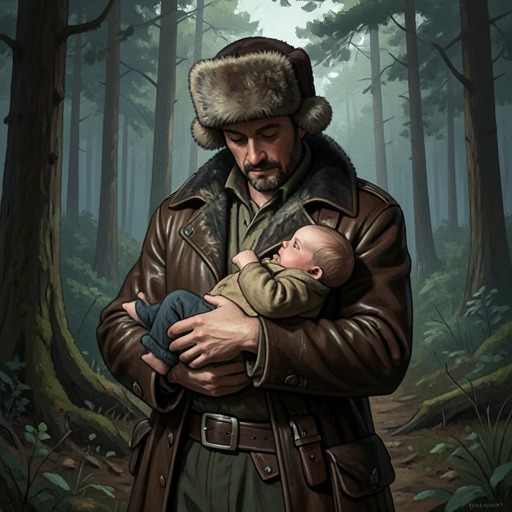
Borka’s role as a father becomes central when Matt detains Birk. At Hell’s Gap, Borka faces Matt with his men and protests that using his son to get what Matt wants is vile. Borka recognizes that Matt wants him to leave, but he refuses to treat Birk as a mere bargaining token. He says that he must first find somewhere safe for his family and band to settle, making the practical danger behind his resistance explicit.
The hostage confrontation also reveals that Borka can distinguish the enemy chief from the father he is confronting. His accusation is directed at Matt’s conduct, not simply at the existence of the feud: he objects to the use of a child as leverage. In that scene, Borka’s responsibility to Birk places a limit on the logic of clan conflict. The demand that he abandon the north fort remains, but his answer is conditioned on finding a place where his family will be out of danger.
The wider story also makes Borka’s position more complicated than a simple contest for territory. When the sheriff’s men ambush the robbers at Robbers’ Walk, they capture two of Borka’s men and wound a third as he tries to escape. Borka brings this warning to Matt, whose men are also threatened by the authorities. Although the chiefs have long treated each other as enemies, Borka has come to warn Matt after Matt recently helped rescue two of Borka’s men from the sheriff’s dungeon. Their exchange of help begins to make common danger more consequential than old hostility.
Rivalry Becomes Alliance
The sheriff’s ambush changes the terms of the feud. Borka arrives at Wolf’s Neck with news that no robber should enter the woods if he values his life, and explains that soldiers have been lying in wait along Robbers’ Walk. Matt first responds as though the danger belongs to both bands, then realizes that he has said “we.” After a pause, he proposes that they join forces. The suggestion unsettles him because it contradicts the inherited enmity he has invoked for years, but Borka welcomes the prospect of a single strong band.
Agreement does not settle who will command it. Borka proposes a single combat to decide the chief, and Matt accepts the challenge. The match follows the rules of a wild-beasts’ contest, in which many rough holds and tricks are permitted, while one particular foul act would mean immediate defeat. These rules make the fight a recognized procedure for settling leadership rather than an ordinary attack. The robbers gather in anticipation, and the contest converts the question of who has greater authority into a public test with an agreed outcome.
Matt wins, and the result makes him chief of the united band. Yet he does not strip Borka of standing or separate him from his followers. He calls Borka his brother, promises that he will retain a chieftain’s name and reputation and continue with his own men, and insists that Matt’s word will carry greater weight. Borka accepts this arrangement, though he is too subdued after the fight to say much. The settlement preserves a difference in rank while ending the immediate contest over who leads.
Family, Reconciliation, and Narrative Significance
The feast after the match turns the political settlement into a change in personal relations. Matt hosts both groups in the stone hall, where he and Borka sit together and recall the childhood they shared before the feud took hold. Their laughter and tears, and their stories about catching rats in the old pigsty, give the fortress a new meaning: a place once divided by hostility becomes a setting where the chiefs can acknowledge their common past. Birk and Ronia sit at the far end of the table and enjoy the memories, their laughter joining the robbers’ voices. Their presence matters to both men, who have only recently had the children back at Matt’s Fort.
Even as the adults reconcile, the children’s choices unsettle the future the chiefs are imagining. Matt tells Borka that Birk may become chief after them because Ronia refuses the inheritance, but Ronia calls out to ask whether Birk actually wants to be a robber chieftain. Her question keeps the band’s succession from appearing settled simply because the adults have arranged it. Earlier, she had rejected Matt’s expectation that she become a robber chief and argued that people should not be robbed; Birk’s own future is not decided by the chiefs’ agreement.
Borka’s character therefore connects the novel’s inherited conflict to its possibility of change. He begins as Matt’s rival and as the target of a feud that both men learned in childhood, but he is also a displaced father trying to protect his family and a leader who can warn an enemy when their people face a common threat. The match grants Matt supremacy without erasing Borka, and the feast replaces the old story of permanent enmity with a shared memory. Their reconciliation changes the organization of the robber band; the children’s refusal to inherit its life leaves open a deeper question about whether that new unity can outlast the tradition that produced it.